Target resolution
1080p, 1440p, and 4K need progressively more raster performance. Path tracing roughly doubles the requirement at any resolution.
4K → RTX 5080+ / 9070 XT+. 1440p → RTX 5070 Ti / 9070. 1080p competitive → any current-gen.
Updated April 30, 2026 · 2 min read
GPU selection in 2025-26 hinges more on AI/upscaling capabilities than raw raster. DLSS 4 and FSR 4 transform mid-range cards into 4K gamers; absent upscaling, you need flagship silicon.
1080p, 1440p, and 4K need progressively more raster performance. Path tracing roughly doubles the requirement at any resolution.
4K → RTX 5080+ / 9070 XT+. 1440p → RTX 5070 Ti / 9070. 1080p competitive → any current-gen.
DLSS 4 with Multi-Frame Generation lifts performance dramatically; FSR 4 closes the quality gap on RDNA 4.
NVIDIA cards if Multi-Frame Generation matters; AMD if you prefer open-source FSR.
8 GB is no longer enough at 1440p+ in modern AAA games. 12 GB is the floor; 16+ for 4K texture pools.
16 GB+ for 4K. AI workloads (LLM inference, Stable Diffusion) need 24+ GB.
TBP varies 200-575W. 12VHPWR connector requires 2x6 PSU support.
PSU rated at TBP × 1.5; ATX 3.1 PSU with native 12V-2x6 cable.
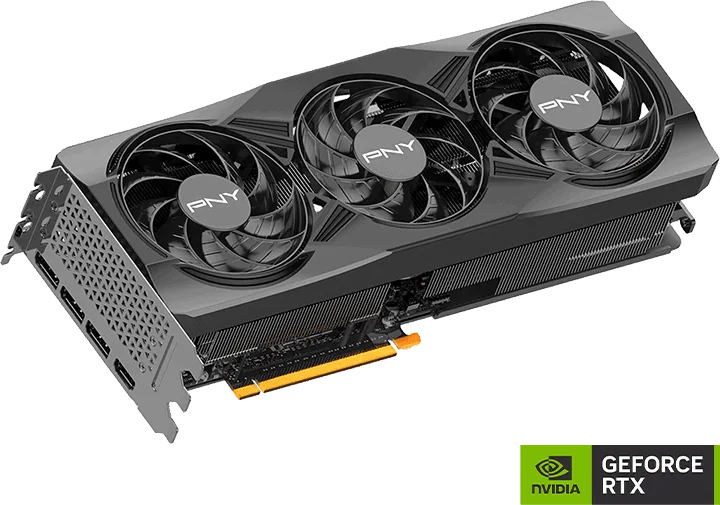
Triple-fan flagships exceed 320mm — check case clearance. Sag bracket included on premium SKUs.
Verify case GPU clearance before purchase. Mid-tower cases at the 300mm mark exclude many flagships.
RTX 5070 Ti at $749 — 4K with DLSS 4, 16 GB, sub-300W. Most-recommended GPU of 2025.