
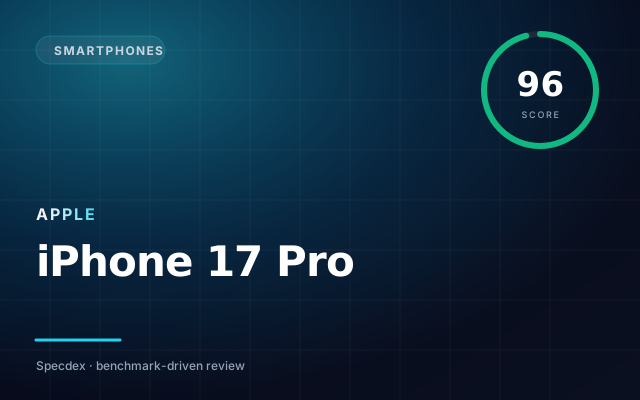
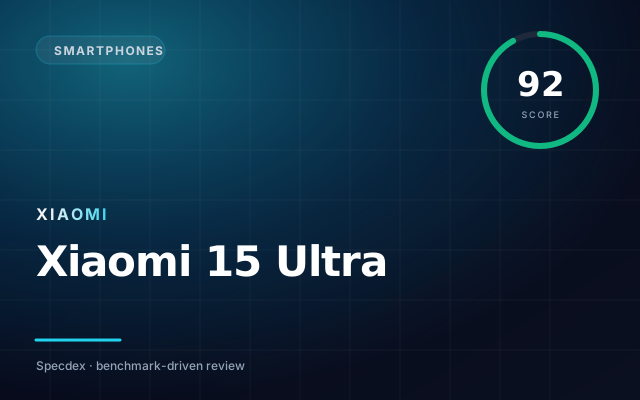

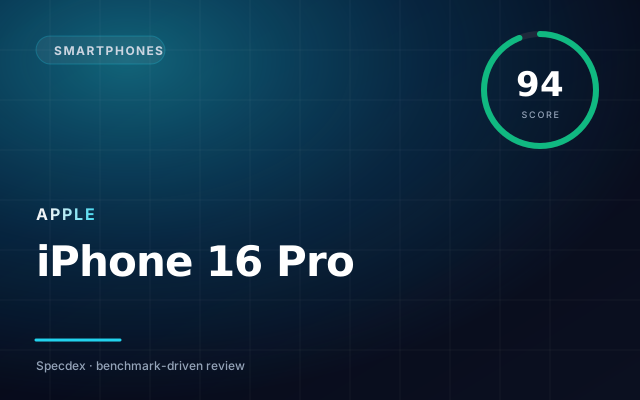
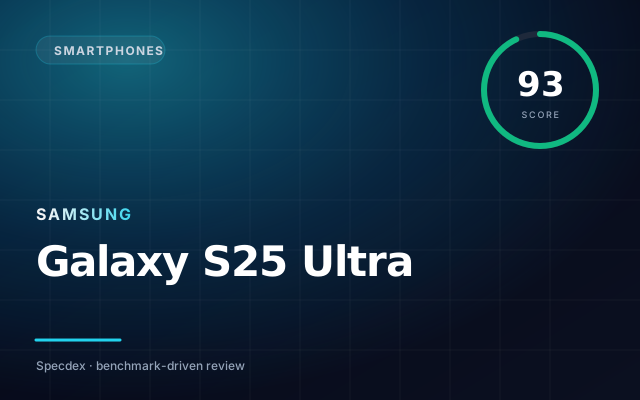
Performance: A19 Pro vs Snapdragon 8 Elite 2 vs Tensor G5
Apple's A19 Pro remains the single-core king; Qualcomm's Snapdragon 8 Elite 2 is the multi-core champion; Google's Tensor G5 sits third in raw performance but leads in on-device AI.
Camera showdown
Galaxy S25 Ultra and Xiaomi 15 Ultra share the camera crown for hardware flexibility (variable zoom, 1-inch sensor). Pixel 10 Pro XL leads for out-of-camera JPEGs. iPhone 17 Pro Max is the most consistent video camera.
AI features
Apple Intelligence and Galaxy AI Gen 3 are tightly integrated with their ecosystems; Gemini Nano 2 runs fully on-device on Pixel 10. For cloud-offload privacy concerns, Pixel and iPhone are ahead of Galaxy.
Ecosystem tradeoffs
iMessage, AirDrop, AirPods, Watch, Mac integration — these lock in iPhone buyers harder than any Android feature. If you use a Mac, the iPhone wins by default. If you want Windows or Linux, Galaxy or Pixel.
Long-term support
All four (Apple, Samsung, Google, OnePlus) now promise 7 years of updates. In practice, Apple delivers fastest and most consistent.