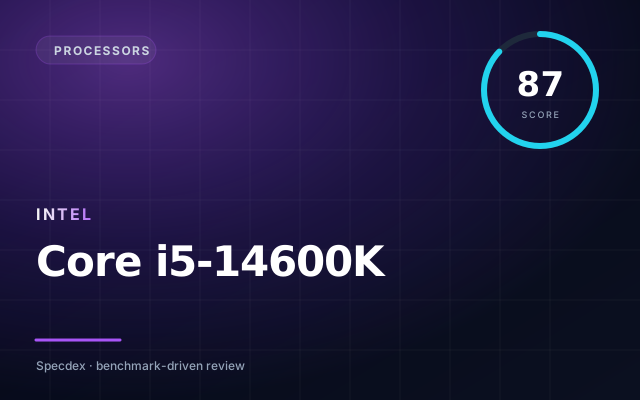
Core i5-14600K
Raptor Lake Refresh · 14C · 5.3 GHz · $319
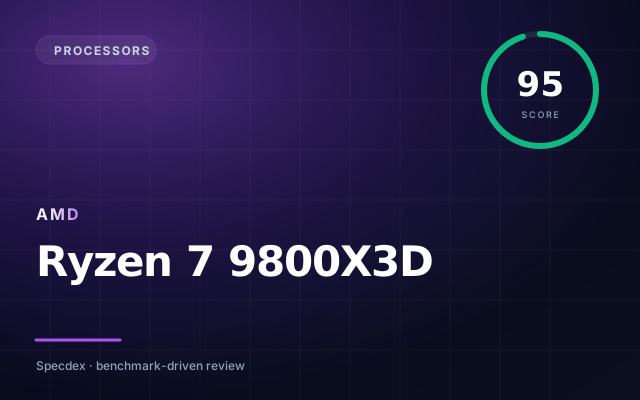
Ryzen 7 9800X3D
Zen 5 · 8C/16T · 104 MB cache · Gaming king
Ryzen 7 9800X3D takes it — here’s why.
In our weighted Specdex score, Core i5-14600K lands at 87 and Ryzen 7 9800X3D at 95. That puts Ryzen 7 9800X3D ahead by 8 points — a decisive margin driven mostly by its strengths in the categories below.
Pick Core i5-14600K if…
- ✓Strong gaming performance
- ✓Good productivity for price
- ✓DDR4 and DDR5 compatible
Pick Ryzen 7 9800X3D if…
- ✓Fastest gaming CPU on the planet
- ✓Overclockable unlike prior X3D parts
- ✓Excellent efficiency (120 W TDP)
Winner by scenario
Derived from the sub-score breakdown · not a separate testGaming
Ryzen 7 9800X3DFrame-rate-bound workloads — favours cache and single-thread speed
Ryzen 7 9800X3D leads on gaming (100 vs 92).
Creators & productivity
TieRendering, compilation, heavy multitasking — favours core count
Effectively tied — neither pulls a 2-point weighted lead.
Power efficiency
Ryzen 7 9800X3DPerformance per watt — thermals, PSU headroom, electricity cost
Ryzen 7 9800X3D leads on efficiency (94 vs 78).
Value for money
Core i5-14600KSpecdex score per dollar at MSRP
Core i5-14600K more score per dollar ($319 vs $479).
Score breakdown
Specs side-by-side
| Spec | Core i5-14600K | Ryzen 7 9800X3D |
|---|---|---|
| Cores | ▲ 14 (6P+8E) | 8 |
| Threads | ▲ 20 | 16 |
| Boost clock | 5.3 GHz | 5.2 GHz |
| TDP | 125 W | 120 W |
| Socket | LGA1700 | AM5 |
| Base clock | — | 4.7 GHz |
| L3 cache | — | 96 MB (3D V-Cache) |
| Process | — | TSMC 4 nm |
| iGPU | — | Radeon Graphics (RDNA 2, 2 CUs) |
| Memory | — | DDR5-5600 |
Core i5-14600K
- +Strong gaming performance
- +Good productivity for price
- +DDR4 and DDR5 compatible
- −Last-gen LGA1700 socket
- −Power hungry under load
- −No AI instructions
Ryzen 7 9800X3D
- +Fastest gaming CPU on the planet
- +Overclockable unlike prior X3D parts
- +Excellent efficiency (120 W TDP)
- −Only 8 cores for productivity-heavy workloads
- −AM5 motherboard required
- −Scarce at launch
FAQ: Core i5-14600K vs Ryzen 7 9800X3D
Which is better, Core i5-14600K or Ryzen 7 9800X3D? +
Ryzen 7 9800X3D scores 95 on our weighted rubric — ahead by 8. Your best pick depends on the sub-scores above.
Is Core i5-14600K worth the price? +
At $319, Core i5-14600K delivers a Specdex score of 87 — strongest in gaming.
Is Ryzen 7 9800X3D worth the price? +
At $479, Ryzen 7 9800X3D delivers a Specdex score of 95 — strongest in gaming.
Does Core i5-14600K or Ryzen 7 9800X3D last longer? +
Based on our long-term update and support ratings, both ship with multi-year support. Battery and reliability scores are visible in the breakdown above.
Which is better for gaming, Core i5-14600K or Ryzen 7 9800X3D? +
Ryzen 7 9800X3D — leads on gaming (100 vs 92). Frame-rate-bound workloads — favours cache and single-thread speed.
Which is better for power efficiency, Core i5-14600K or Ryzen 7 9800X3D? +
Ryzen 7 9800X3D — leads on efficiency (94 vs 78). Performance per watt — thermals, PSU headroom, electricity cost.